
Composite vs Wood Deck Cost: Design Ideas for a Smarter Minnesota Backyard
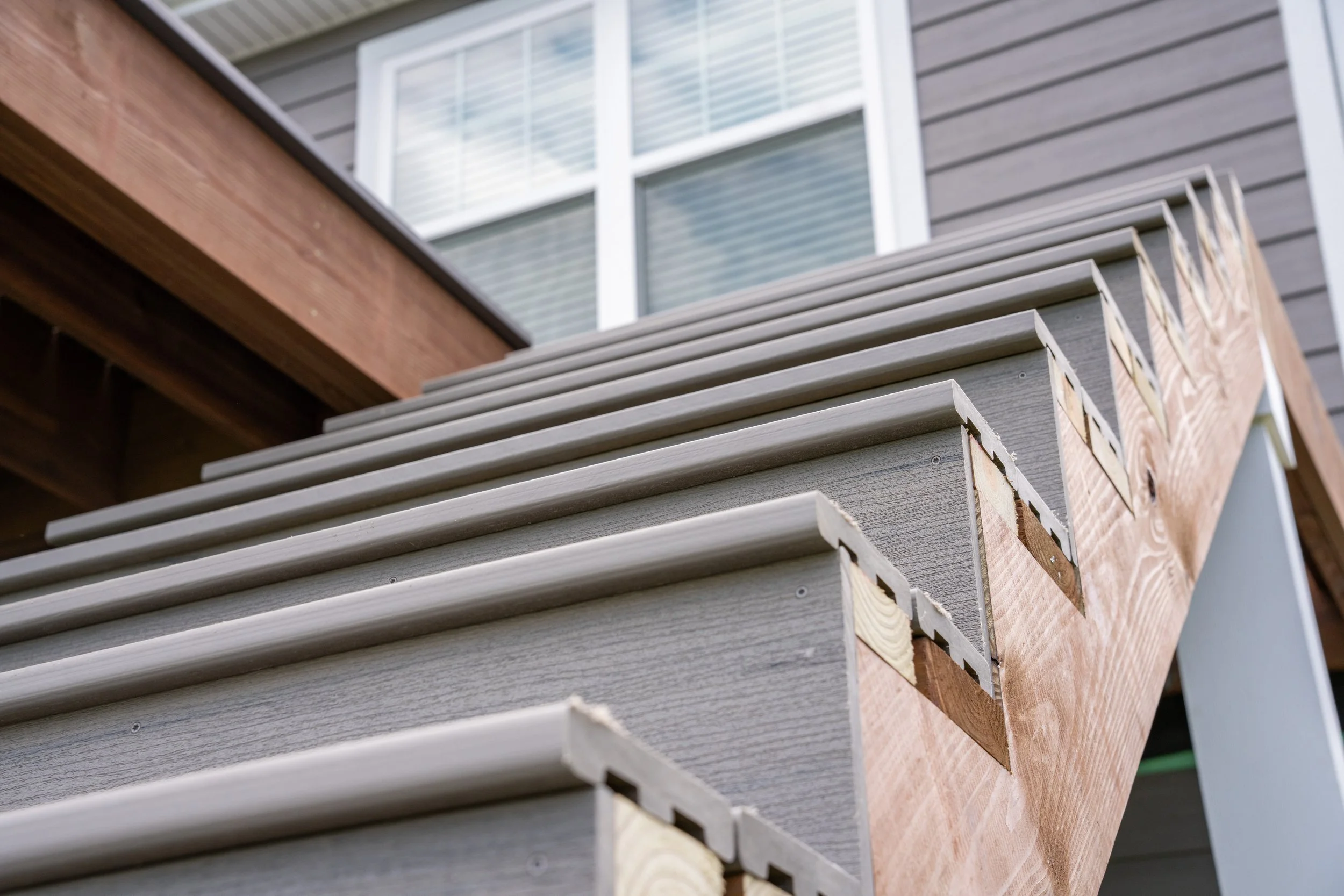
Deck Design Ideas: Composite vs Wood Cost for a Smarter Backyard Upgrade
When homeowners search for deck design ideas, the conversation usually lands on one question: wood or composite? Your outdoor space deserves a material that matches both your vision and your budget, but those two factors don't always point in the same direction.
Consider a family deck planned for Plymouth, MN, in summer 2026. Pressure-treated pine keeps upfront costs lower, but composite deck boards offer fade-resistant style and minimal upkeep. Which actually costs less over a decade or two? The answer depends on how you weigh installation price against maintenance, lifespan, and design flexibility.
This guide delivers practical design inspiration while comparing composite vs wood cost over 10–20 years, tailored to Minnesota's freeze-thaw cycles and heavy snow loads. If you've been searching for a 'custom deck design near me' or a 'deck designer MN,' you'll also see how the process works and what drives final quotes.
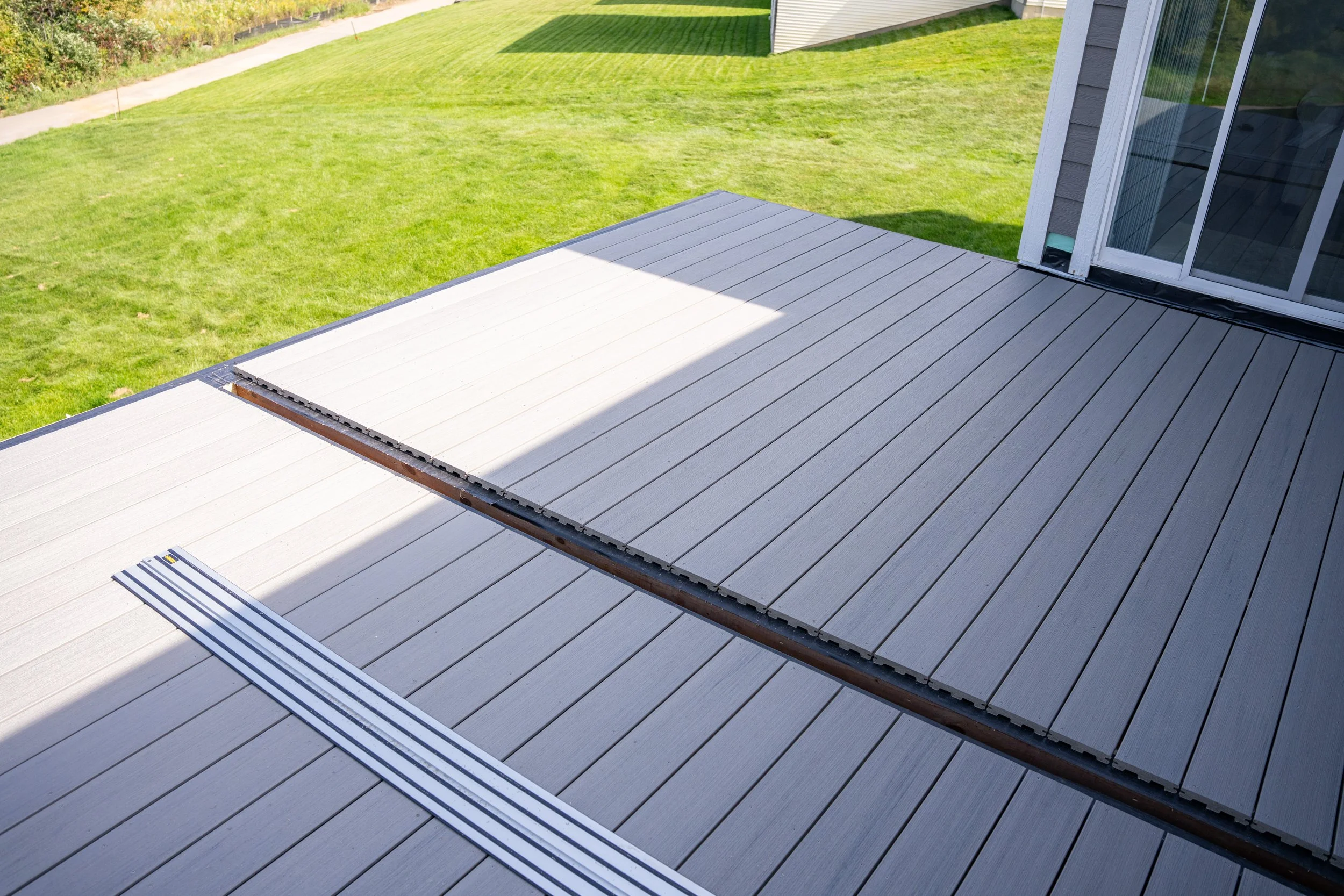
Covered Deck Builders
Upfront Cost: Composite vs Wood in 2026
Composite decking costs more upfront than pressure-treated pine or cedar. The gap narrows when you factor in design complexity and labor, but it's real, and it's the primary reason some homeowners still choose wood as a starting point.
A few important notes on how decks are priced in the Twin Cities:
Stairs are typically NOT priced per square foot. Because of the structural complexity and labor involved, most contractors quote stairs separately based on the number of steps and design. Always confirm this with your contractor.
Railings are generally quoted per linear foot, not per square foot.
Design complexity, angles, curves, and multiple levels add cost beyond the square footage.
Site conditions, lot access, and existing structure can all move the number significantly.
Design complexity pushes costs higher across all material types. Multi-level layouts add 20–30% due to extra stairs, railings, and footings. Curved designs add 15–25%. Built-in seating or storage, integrated lighting, and pergola or shade structures each add meaningful cost on top of material and labor.
Composite can reduce some install time on staining and finishing compared with site-finished wood, slightly narrowing the upfront gap. But the real financial advantage of a composite comes in the years that follow, not at signing.
The best way to understand what your specific project will cost is a custom, itemized estimate from a licensed local contractor. Be cautious of any quote that comes in 20–30% below what reputable local contractors typically charge this often signals lower-grade materials or surprise change orders down the line.
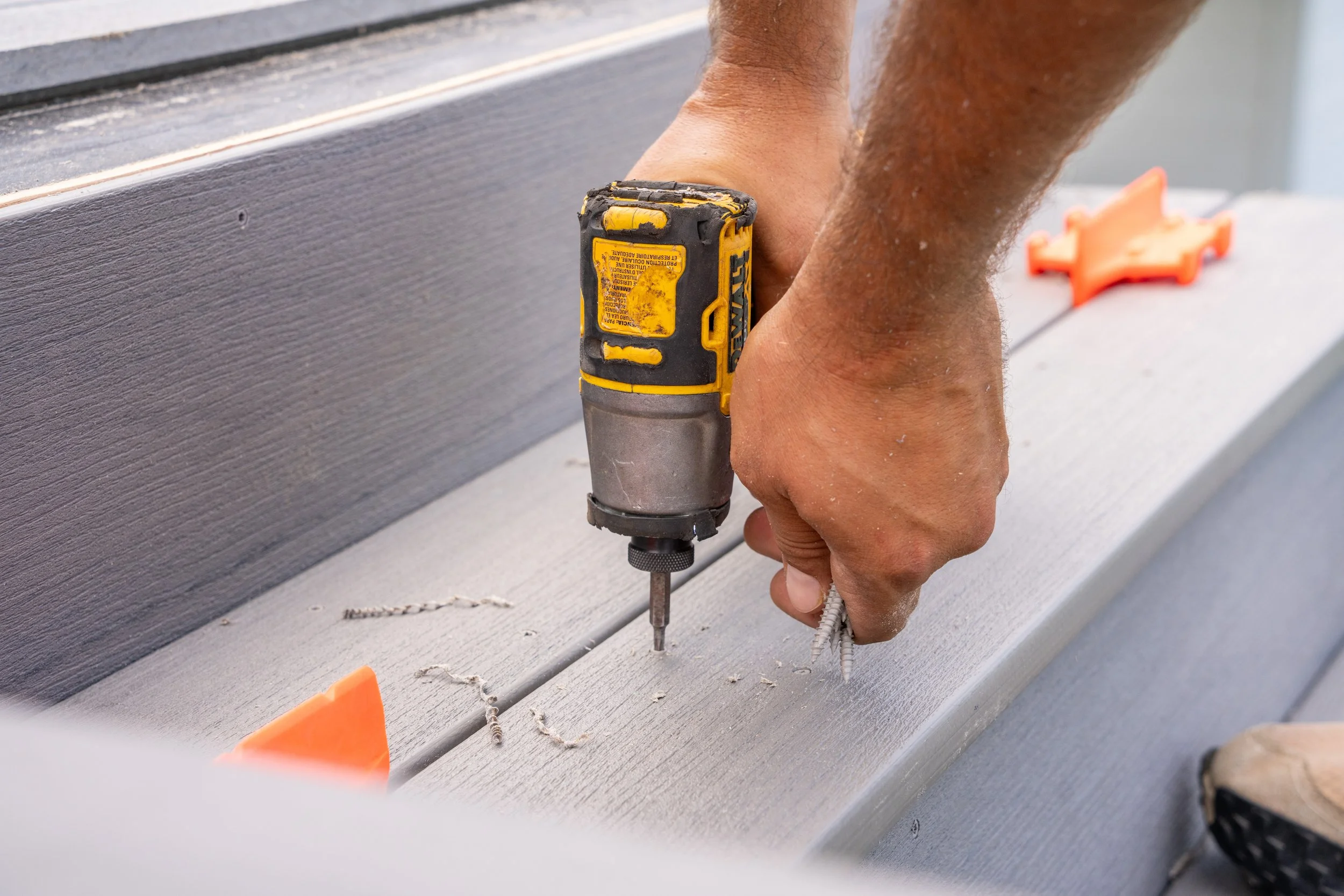
Professional Deck Installation Services in Minneapolis, MN
Long-Term Cost: How Your Deck Design Ages Over 10–20 Years
Minnesota's freeze-thaw cycles, heavy snowfalls, and intense UV summers punish wood decking relentlessly. Any serious deck plan needs to account for how materials age under these conditions.
Typical wood maintenance costs (annual):
Inspections: moderate cost
Power washing (bi-annual): moderate cost
Staining/sealing every 2–3 years: high cost for a 400 sq ft deck
Board replacements: variable cost for high-use areas
Composite maintenance costs (annual):
Quarterly washing: minimal cost
Fastener checks: minimal cost
The difference is dramatic. Wood decks require consistent, recurring investment. Composite requires almost none.
10-Year and 20-Year Total Cost of Ownership (Illustrative Estimates)
The table below uses illustrative estimates based on Twin Cities market conditions as of early 2026. These are planning benchmarks, not quotes. Actual costs vary by project, site, labor rates, and market conditions. All figures are subject to change.
| Material | Upfront Cost | 10-Year Maintenance | 10-Year Total | 20-Year Total (incl. rebuild) |
|---|---|---|---|---|
| Pressure-Treated Pine | Lower upfront | High (staining, repairs) | Higher than composite by year 8–10 | Significantly higher — rebuild likely after 12–15 yrs |
| Western Red Cedar | Moderate upfront | Significant (staining, repairs) | Higher than composite | Higher — rebuild likely after 15–20 yrs |
| Mid-Range Composite | Higher upfront | Minimal (cleaning only) | Often lower by year 8–10 | Significantly lower — no rebuild needed |
Note: Cedar performs closer to pressure-treated than to composite in terms of maintenance demands in our climate. While cedar has better aesthetics than PT wood, it still requires regular staining, sealing, and power-washing, and maintenance costs over time are high. It is not a low-maintenance alternative to composite.
Wood totals include estimated rebuild costs that can arise when a wood deck reaches the end of its functional lifespan after 12–15 years. More complex design ideas — multi-level decks, custom railings, integrated planters — compound future wood maintenance costs. Composite deck boards handle these features with minimal additional upkeep.
Lifespan, Warranty, and What You're Really Paying For
In Minnesota's climate, realistic lifespan expectations diverge sharply between materials. Pressure-treated pine typically requires a major overhaul after 10–15 years, as warping, moisture damage, and splinters accumulate. Cedar stretches to 15–20 years with diligent care, but fades and stains unevenly.
Quality composite brands (Trex Transcend, TimberTech AZEK) last 25–50 years structurally. Most offer 25–30 year fade and stain warranties covering materials and labour, though they exclude improper installation or acts of nature.
Investing in premium features, curved lines, picture-frame borders, and in-deck lighting makes more sense on a surface expected to last three decades. The 'replacement event' matters here: tearing down and rebuilding a wood deck after 15 years is a major additional expense that essentially doubles your long-term investment compared to keeping a composite deck in place.
Deck Design Ideas That Maximize Value with Composite vs Wood
Some deck design ideas pair naturally with specific materials. Understanding these connections helps you stretch your budget while achieving the style you want.
Multi-level entertaining decks with dining zones, lounge areas, and grill spaces look dramatic but add complexity. Each additional level brings extra stairs and railings. Composite handles this well; moisture trapped between levels won't cause the rot that plagues wood versions, and you avoid annual sealing of multiple surfaces.
Integrated planters, benches, and storage maximize deck area efficiency. These built-in features are low-maintenance in composite; the capped edges resist soil moisture. Wood planters often rot at the base within 5–7 years, requiring frequent replacement.
Ambient lighting and privacy screens transform your deck into an outdoor room for year-round use. Composite fascia and posts accommodate hidden wiring channels and resist the twisting common in wood posts during Minnesota's thermal expansion cycles.
Color and pattern options like two-tone borders, diagonal layouts, or herringbone patterns create visual drama. Composite deck boards maintain uniform dimensions and resist the cupping that disrupts patterns in wood after 5–10 years of UV exposure.
Which Option Fits Your Budget and How You Use Your Deck?
Two homeowner profiles emerge when comparing materials: those needing the lowest upfront cost now versus those planning to stay 10–20 years and prioritizing long-term savings.
Budget-focused scenario: A Minnesota family chooses pressure-treated wood, the most affordable entry-level option, for a simple grilling deck to stay under a tight budget. They accept higher upkeep (staining every 2–3 years, annual inspections) as a trade-off for immediate affordability. This makes sense if you're selling within 5–7 years. Understand, though, that pressure-treated is the lowest-grade material on this list, not just the lowest-cost.
Long-term value scenario: A Plymouth homeowner invests in a composite multi-level deck with a pergola, built-in seating, and string lights. Over 20 years, they'll spend a fraction of what a comparable wood deck would cost in maintenance — and the composite deck pays for itself.
Minnesota's climate, snow loads, ice, salt, UV summers- favors composite for complex or high-traffic designs. Wood can still work for smaller, simpler decks or shorter ownership timelines.
Unsure about budget fit? Contact a local deck designer in MN for a line-item quote comparing the same plan built in wood vs composite.
Real Minnesota Deck Projects: Design Ideas and Material Choices
Maple Grove composite multi-level (2024): A 500 sq ft entertaining deck with outdoor dining area, outdoor kitchen space, and recessed lighting. The homeowners chose composite over cedar for zero-maintenance appeal amid heavy snowfall. Two years in, no repairs to neighboring wood decks have been needed, nor have any significant fixes.
Plymouth pressure-treated budget build (2025): A 400 sq ft grilling deck with a simple rectangular layout. The trade-off: staining is due in 2026, and the homeowner accepted a shorter lifespan for upfront affordability.
Blaine wood-to-composite retrofit: An older wood deck was upgraded to composite. The project kept the existing footprint but added wider stairs, a cocktail rail, and a privacy screen, slashing future upkeep while enhancing functionality.
Each project is adapted to Minnesota weather, with helical piles addressing frost heave concerns.
How Custom Deck Design Services Work in Minnesota
A 'custom deck design near me' search turns into a real project through consultation, design concepts, and detailed quotes. Working with a deck designer in MN typically starts with an on-site visit. The designer measures your yard, discusses your lifestyle, entertaining, quiet retreat, grilling, and identifies must-have vs nice-to-have features.
Main cost drivers a designer will explain:
Size (sq ft) and elevation
Footing depth (42–60 inches for MN frost)
Railing style and linear footage
Stair count and complexity (quoted separately, not per sq ft)
Lighting, pergola, or roof structures
Built-in seating or planters
Material choice (wood vs composite brand and line)
Most designers provide at least two versions of the same deck design: one priced in wood, one in composite. This side-by-side comparison highlights lifetime cost differences alongside aesthetic options.
How to Get an Accurate Composite vs Wood Quote for Your Deck Design
Online cost averages help with planning, but only a site-specific quote captures your property's grading, access, permits, and chosen design ideas. Information to gather before contacting deck design services:
Rough dimensions and photos of your yard
Preferred features (fire pit, outdoor kitchen, privacy screens, shade structures)
Target completion date
Budget range, if known
Sharing saved deck design ideas, images from Pinterest, Houzz, or portfolio examples, helps designers quickly price both composite and wood options for similar layouts. The more specific your inspiration, the faster you'll get accurate numbers.
Permitting in Minnesota adds 4–8 weeks for elevated or multi-level decks. Hennepin County requires snow load calculations, and frost depth footings add cost versus warmer climates.
Choosing Deck Designs That Pay Off Over Time
While wood offers a lower upfront cost for many deck design ideas, composite often wins over 10–20 years in Minnesota due to minimal maintenance and longer lifespan. The best material depends on how long you plan to stay, how complex your design is, and how much time you want to spend on upkeep.
Translate your favorite deck design ideas into a detailed plan, then compare composite vs wood quotes before committing. Schedule a custom deck design consultation with a local expert to align your vision, budget, and long-term value.
Composite vs Wood Deck Design and Cost
-
In Minnesota, when you add realistic 20-year maintenance costs for staining, sealing, and replacing damaged boards on a wood deck, composite often ends up similar or lower in total cost. A pressure-treated deck can reach a much higher total over 20 years with maintenance and rebuild costs, compared to a composite deck of the same size. The exact crossover point depends on local labor rates and how diligently the homeowner maintains a wood deck.
-
Deck costs in the Twin Cities vary significantly based on size, material tier, design complexity, and site conditions. Small basic wood decks start lower than composite builds of comparable size; larger entertaining decks with pergolas, lighting, and built-ins are at the higher end across both material types. Elevation, access challenges, railings, and roof structures can significantly raise costs beyond material choice alone. A custom on-site quote from a deck designer in MN is the only way to get an accurate figure specific to your property.
-
Hybrid designs keep structural framing in pressure-treated wood while using composite for the surface, railings, and fascia. This reduces maintenance on visible elements without the full cost of composite framing. The approach can save meaningful money upfront while still delivering many low-maintenance benefits. Mixing visible wood and composite surfaces requires careful design to maintain a cohesive appearance and avoid uneven aging over time.
-
Certain highly custom carpentry details, rustic aesthetics, or projects requiring extensive site-built furniture can be more economical or visually appropriate in wood. However, curved or intricate shapes are often actually easier with composite, which bends and cuts predictably. Discuss unusual or artisan design concepts with a deck design service to choose the best material for both look and budget.
-
Look for licensed, insured contractors with a strong portfolio of composite and wood projects in Minnesota and recent local references. Compare at least two written quotes that clearly separate material, labor, and permit costs so that the composite vs wood differences are obvious. Ask how the designer will adapt deck design ideas to local snow loads, frost depth requirements, and municipal codes specific to your area.
