
Composite Decking vs Wood Cost: Which Option Saves You More?
Composite Decking vs Wood Cost — Which Option Saves You More
Key Takeaways
In the Twin Cities, composite decking costs more upfront than pressure-treated wood or cedar, but the gap narrows significantly once long-term maintenance is factored in.
While composite decking has higher initial costs than wood, a thorough cost comparison over several years shows that composite offers greater long-term value due to lower maintenance and a longer lifespan.
Within five years, the total cost of a pressure-treated wood deck usually exceeds that of a composite deck due to ongoing maintenance expenses.
Wood decks require significant annual maintenance costs for staining, sealing, and repairs; composite decks need only occasional cleaning.
Composite decking typically lasts 25 to 30 years, while wood decking generally lasts only 10 to 15 years before needing replacement.
Wood decks in Minnesota usually surpass composite in total cost of ownership around year 6–8 due to staining, sealing, and repair expenses.
Over 20 years, a typical 300 sq ft wood deck in the Twin Cities can cost significantly more than a comparable composite deck when maintenance is included.
This article uses the local Twin Cities market context, not national averages, to give you accurate guidance for your decision.
Ready for exact figures? Get a free estimate tailored to your backyard.
Composite Decking vs Wood Cost in the Twin Cities
When comparing composite decking vs wood cost, the sticker shock hits most homeowners immediately. Composite materials carry a higher upfront cost; there's no getting around that. But if you've been researching online, you've probably noticed that most numbers floating around are national averages, which often run well below what Twin Cities contractors actually charge.
Minnesota's climate changes the long-term math considerably. Our 150+ freeze-thaw cycles annually, heavy snow loads, and intense summer UV exposure accelerate wood degradation faster than in milder regions. That means maintenance costs add up quickly, often faster than homeowners expect. That's why a thorough cost comparison, including both an initial cost comparison and long-term expense analysis, is essential to understand the true value of composite decking versus wood.
This article compares upfront pricing, 10–20 year maintenance expenses, and real-world examples for a typical 300 sq ft deck in Minneapolis–St. Paul. We'll focus on pressure-treated pine and cedar versus mid-range composite systems, giving you the context you need. For deeper information on brands, see our composite decking brand guide.
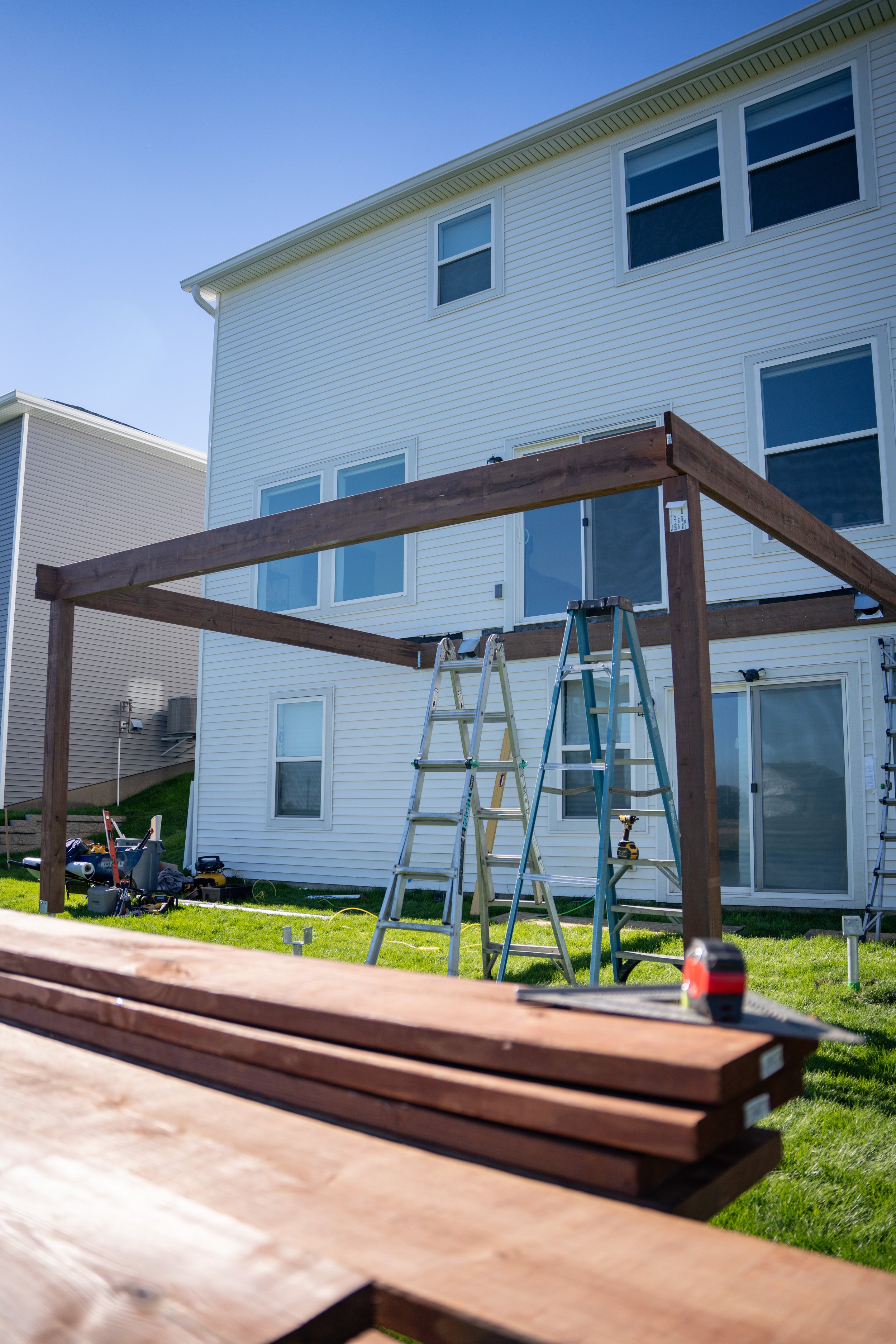
Outdoor living composite deck twin cities Minnesota
Installed Cost Ranges for the Twin Cities Market
Installed pricing includes design, permits, footings to Minnesota frost depth, framing, surface boards, and standard railings. Because pricing varies based on design complexity, site conditions, material tiers, and local labor rates, the best way to understand your real cost is a custom, on-site estimate from a licensed Twin Cities contractor.
Be cautious of any quote that comes in 20–30% below what reputable local contractors typically charge; this often signals lower-grade materials, unskilled labor, or change orders to come.
As a general reference point, composite decks run higher upfront than pressure-treated or cedar builds of the same size. However, upfront cost tells only half the story — maintenance and lifespan flip the equation for most Twin Cities homeowners.
The Hidden Cost of Wood — Maintenance Over 10–20 Years
Minnesota's freeze-thaw cycles, snow loads, and UV exposure make maintenance costs especially critical when comparing composite decking vs wood costs. Wood deck owners in our climate face significantly higher upkeep demands than homeowners in more temperate regions.
Wood decks typically require maintenance every 2–3 years, including staining and sealing, to prevent rot and decay. Composite decking requires only semi-annual cleaning. Composite decking does not require sanding, sealing, or painting, which significantly reduces maintenance efforts compared to wood decking.
This section uses realistic local context for staining, sealing, and repairs in the Twin Cities. Homeowners often underestimate both the dollar cost and the 20–40 hours per maintenance cycle spent on sanding, staining, and cleanup.
Annual Staining, Sealing, and Cleaning Costs
Professional staining and sealing for a 300 sq ft pressure-treated or cedar deck in the Twin Cities needs to happen every 2–3 years to protect against moisture infiltration and UV damage, and costs can accumulate quickly over a decade.
Composite deck care looks dramatically different. Annual cleaning requires only a garden hose or light-pressure wash 1–2 times per year. Maintenance typically takes less than an hour per year, making it far more convenient than wood.
Beyond dollars, consider your time. Those weekends spent sanding and staining represent real opportunity costs. DIY wood maintenance lowers cash costs but adds significant time investment, typically 20–40 hours per refinishing cycle.
Repair and Board Replacement Frequency
After 5–10 years in Minnesota, wood decks commonly need cupped or cracked board replacement, loose fastener repair, rotted stair tread fixes, and wobbly railing sections. Expect minor wood repairs almost every year and more significant work around years 8–12. A partial deck overhaul at that point can represent a major additional expense.
Composite decking requires far less intervention. Unless installation errors like improper gapping trap water, repairs rarely accumulate over a full decade. The framing underneath, typically pressure-treated lumber, may need occasional attention with either material.
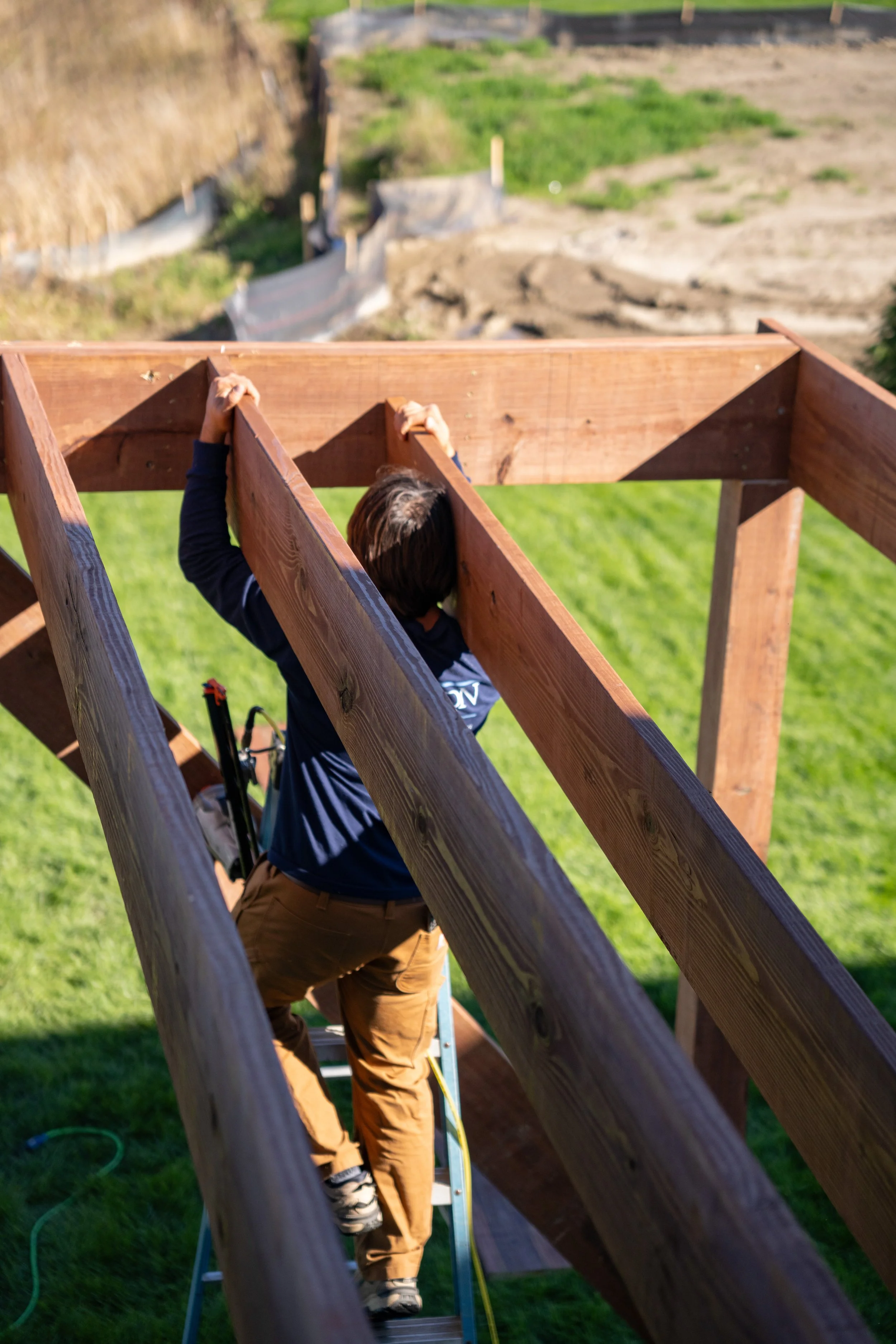
Deck Framing Installation — Maple Grove Minnesota
10-Year and 20-Year Total Cost of Ownership Comparison
The tables below are illustrative estimates based on Twin Cities market conditions as of early 2026. Actual costs vary by project, site, and market conditions. Treat these as planning benchmarks, not quotes. All figures are subject to change.
10-Year Total Cost of Ownership (300 sq ft deck — illustrative estimate)
| Material | Initial Cost | Maintenance | Repairs | 10-Year Total |
|---|---|---|---|---|
| Pressure-treated | Lower upfront | Significant (staining, sealing) High ongoing cost |
Moderate | Typically higher than composite |
| Cedar | Moderate upfront | Significant (staining, sealing) High ongoing cost |
Moderate | Typically higher than composite |
| Composite (mid-tier) | Higher upfront | Minimal (cleaning only) Low ongoing cost |
Minimal | Often lower by year 8–10 |
Illustrative estimates based on Twin Cities market conditions, early 2026. Actual costs vary by project and site. Not a quote.
20-Year Total Cost of Ownership (300 sq ft deck illustrative estimate):
By year 10, wood decks have typically cost more than a comparable composite. By year 20, the gap can exceed $6,000–$9,000 for a typical Twin Cities home, and these estimates don't include potentially needing to fully replace a worn-out wood deck around 15–20 years, versus a composite deck that remains serviceable.
Note: These ranges are illustrative benchmarks based on local market conditions in early 2026 and are subject to change. For accurate numbers specific to your project, request a free custom estimate.
The 'Composite Pays for Itself' Inflection Point
The inflection point represents when cumulative maintenance and repair costs on wood surpass the higher initial investment in composite for the same size deck.
For a 300 sq ft deck in Minnesota, this crossover typically occurs around year 6–8 for pressure-treated wood versus mid-tier composite. Cedar's lower maintenance needs push this point slightly later, around year 8–10.
What does this mean practically? If you plan to stay in your home 10+ years, a composite offers clear financial advantages. Planning to move within 3–5 years? The math becomes less certain, though composite decking offers potential resale appeal.
If you're a long-term homeowner, request a tailored cost-of-ownership comparison as part of a free estimate.
Composite Decking Cost Factors What Moves the Price
Composite decking prices in MN range widely due to factors like brand selection, deck complexity, site conditions, and the quality of materials used. Here's what pushes a composite deck toward the low or high end of the installed price range, with material costs playing a significant role in your overall project budget.
Brand and Product Tier (Trex and TimberTech Examples)
Composite manufacturers like Trex and TimberTech organize multiple product lines into 'good / better / best' tiers:
Entry-level (Trex Enhance): basic grooved boards, 25-year warranty
Mid-range (Trex Select): deeper grain patterns, better fade resistance
Premium (Trex Transcend, TimberTech AZEK): multi-tonal colors, 50-year fade-and-stain warranty
Higher tiers offer greater durability and water resistance that perform well in Minnesota weather. For most homeowners, mid-range composite boards deliver the best balance of appearance, performance, and cost.
Deck Size, Shape, and Features
Deck size drives costs most obviously; larger decks mean more material and labor. Design complexity matters too: angles, picture framing, or curves increase cutting and labor time by 20–40%. Multi-level designs add structural complexity.
Stairs add meaningful cost beyond deck square footage. Because stair construction involves more complex structural and labor considerations, contractors typically price stairs separately, not on a per-square-foot basis. The same applies to railings, which often represent 20–30% of the total project cost on elevated decks.
Common features that push costs toward the upper range include extra stair runs, drink rails, privacy screens, built-in benches, integrated lighting, and upgraded railings.
Railings and Accessories
In many Twin Cities composite projects, railings represent a significant portion of the total deck price, especially on elevated decks requiring extensive guardrail footage. Options include wood rail (requires painting), composite rail, aluminum, and cable or glass systems. Accessories like fascia boards, color-matched fasteners, post caps, and under-rail lighting incrementally add to final quotes. Separate your 'must-haves' from 'nice-to-haves' when working with your contractor.
Site Conditions and Labor Variables in Minnesota
Local factors significantly impact your quote: steep yards require extra footings, old deck removal adds cost, tight side-yard access can add a mobilization premium, and extensive tree roots require additional excavation. Minnesota-specific code requirements for frost-depth footings and joist spacing for composite boards (typically 12–16 inches on center) affect both labor hours and material counts. Peak building season from May through September can also influence scheduling and demand.
A reputable local contractor will walk your yard, inspect existing conditions, and explain exactly how these factors influence your specific quote.
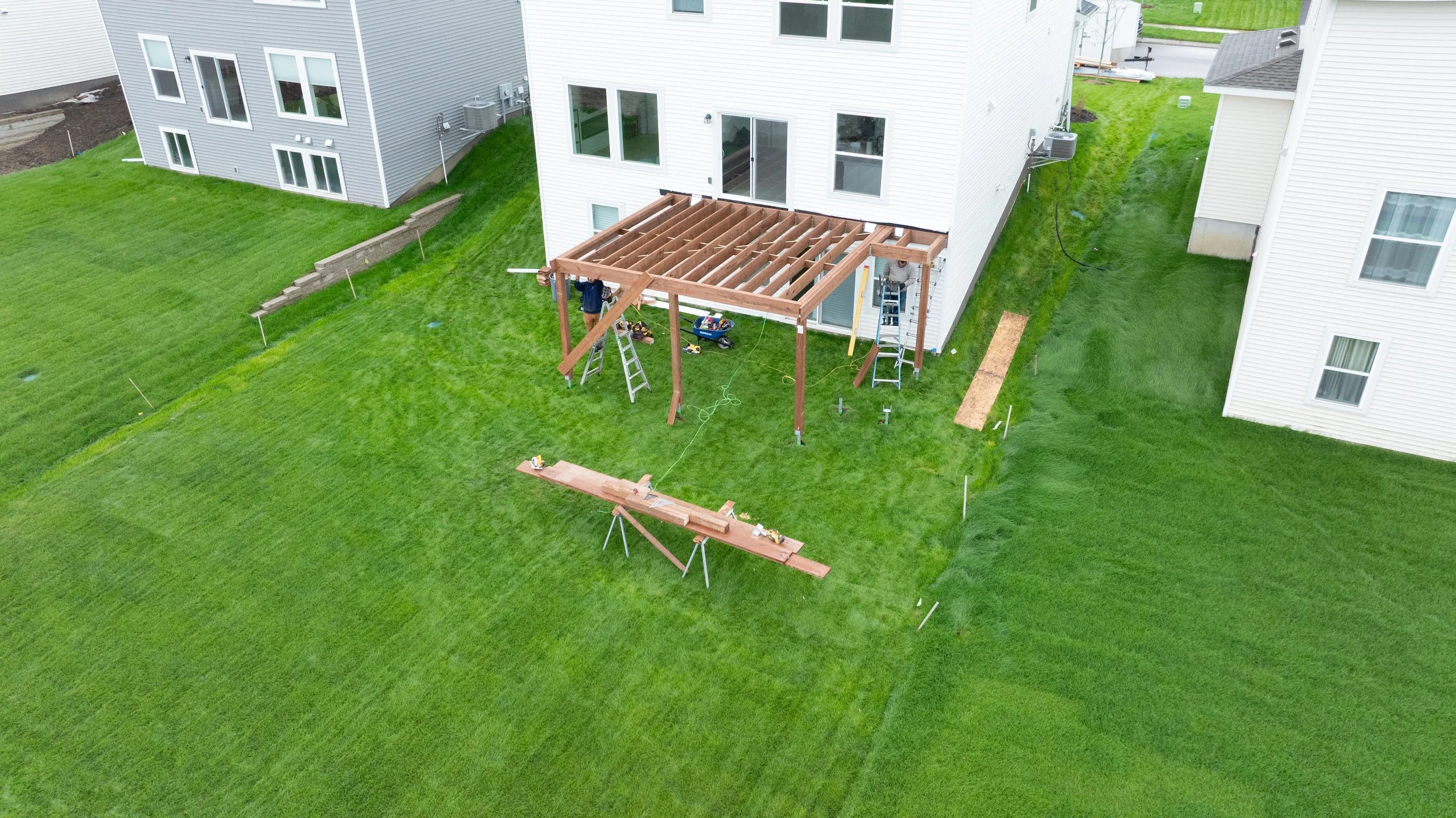
Deck Framing Under Construction in Maple Grove, Minnesota
Environmental Impact — Sustainability and Eco-Friendliness of Composite vs Wood
When it comes to the environmental impact of your new deck, composite decking materials are engineered with sustainability in mind. Most composite manufacturers use a blend of recycled materials such as reclaimed sawdust and recycled plastic film to create durable, long-lasting deck boards. This diverts waste from landfills and reduces demand for virgin lumber.
In contrast, pressure-treated wood relies on chemical preservatives that can leach into the environment over time. Regular maintenance of wood decks, including staining and sealing, often involves additional chemicals and solvents, further increasing the environmental footprint.
Because composite decking requires minimal maintenance, there is no need for annual staining, sealing, or harsh chemical treatments. It reduces both the use of potentially harmful substances and the frequency of material replacement. Many composite decking lines are certified for their high recycled content and sustainable manufacturing practices.
For wood deck owners who value sustainability, it's important to weigh the ongoing environmental costs of regular maintenance and eventual replacement.
When Wood Still Makes Sense
Despite the long-term advantages of composite, traditional wood decking remains the right call for some Minnesota homeowners. Being transparent about this builds trust and helps you make a decision you won't regret.
Tight Upfront Budget
Sometimes homeowners simply need the lowest possible initial cost to create an outdoor living space now, even knowing long-term costs will be higher. Pressure-treated pine is the most affordable entry point, though it carries the highest maintenance burden. For small, simple decks, the gap between basic pressure-treated and mid-range composite can represent a significant portion of a tight budget.
Careful DIY annual maintenance can help stretch the life of a budget wood deck, but it requires consistent effort every 2–3 years. Even in this situation, consider pricing out an entry-level composite option for comparison.
Short Ownership Horizon
If you expect to move within 3–5 years, you may not personally see the full financial benefit of the composite's minimal maintenance. That said, composite decking can still help with resale appeal, especially in markets where buyers value low-maintenance outdoor spaces. Talk with your realtor about local buyer preferences before choosing wood vs composite.
Aesthetic Preference for Natural Wood
Some homeowners love the look, feel, and natural beauty of real wood, the way cedar ages, the warmth underfoot on bare feet, and the ability to change stain colors over time. Unlike wood, modern composites don't patina or accept new stain colors. While premium composite decking offers impressive wood-grain mimicry, it's not identical to the real thing.
If traditional aesthetic matters most and you're committed to regular maintenance, cedar or exotic hardwoods might still be your best fit. But see premium composite samples in person before deciding, many wood enthusiasts are surprised by how close modern composites have become.
What Does a Composite Deck Cost in Minnesota? Get a Real Number
While this article provides a realistic Twin Cities context, the only way to know exactly what your composite deck project will cost is a custom quote. Key inputs that shape your estimate include deck size and layout, material tier selection, railing type and linear footage, stair requirements, and site conditions and access.
The typical process with a local contractor involves a phone or online intake, on-site consultation, design review, and written proposal. A good contractor can also prepare side-by-side cost comparisons, wood vs composite, for the same design, so you can see the numbers clearly before committing.
Ready for exact figures? Get a free estimate tailored to your specific backyard and preferences.
Which Option Really Saves You More?
When you answer 'composite decking vs wood cost, which saves more?' for Twin Cities ownership spanning 10–20 years, composite typically wins. While composite decks cost more to build initially, they tend to come out ahead financially by around year 6–8 and remain less expensive over a 20-year span due to dramatically lower maintenance costs and greater durability.
Beyond the financial math, composite delivers non-monetary benefits: fewer weekends spent on constant upkeep, a safer splinter-free deck surface for bare feet, and a more consistent appearance through Minnesota winters and summers. Installing composite decking is a long-term investment that pays dividends in both dollars and quality of life.
The only way to know your exact costs is a site visit and a custom quote. Get a free estimate to see the real numbers for your own outdoor space — no obligation, just clarity.
-
For a typical 300 sq ft deck in the Twin Cities, composite usually becomes cheaper than pressure-treated wood after about 6–8 years, once staining, sealing, and repairs are counted. Over 20 years, the total cost of ownership for wood can exceed composite by thousands of dollars, depending on maintenance frequency and whether you hire professionals or handle upkeep yourself.
-
Twin Cities wood deck owners face meaningful annual maintenance costs when averaging professional staining costs every 2–3 years, plus minor repairs. Composite decking requires only inexpensive cleaning supplies or an optional professional wash. DIY wood maintenance lowers cash costs but adds significant time investment, typically 20–40 hours per refinishing cycle.
-
Composite decking handles freeze-thaw cycles well, generally absorbing far less moisture than wood, which reduces cracking, warping, and rot risks. Proper professional installation, correct joist spacing, and gapping are critical for both materials in cold climates. For snow removal, use plastic shovels and avoid metal blades on both deck surfaces.
-
In most Twin Cities municipalities, permits are required for a new deck regardless of the decking material. Permits and inspections protect you by ensuring the deck meets Minnesota building codes for safety and frost-depth requirements. This shouldn't be a deciding factor between wood and composite.
-
This phased approach is possible, but the framing must be built to current composite requirements from day one, including proper joist spacing (12–16 inches on center), beam sizing, and ledger details. Upgrading later still involves labor, disposal fees, and potentially framing repairs if environmental factors have caused deterioration. Total lifetime cost may not be lower than starting with the composite. Discuss this approach with a local contractor to understand the trade-offs specific to your home and budget before committing.
