
The Best Composite Decking for Minnesota Homes (2026 Guide)
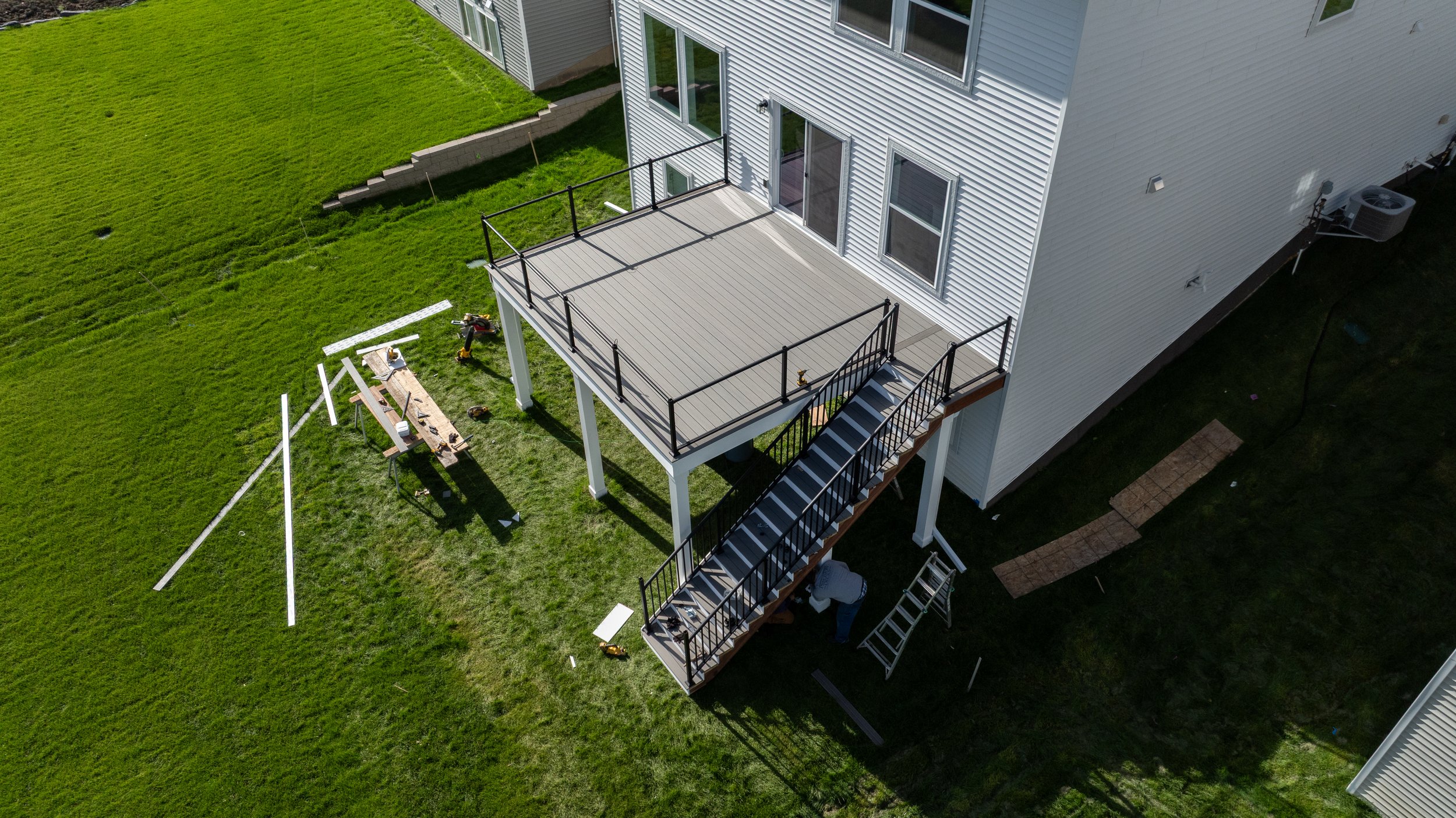
Elevated Composite Deck with Black Metal Railings — Maple Grove, MN
Best Composite Decking Options for Durable and Stylish Outdoor Spaces
Minnesota's freeze-thaw cycles, sub-zero winters, and humid summers demand more from outdoor materials than most parts of the country. That's why composite decking has become the go-to choice for Twin Cities homeowners who want a deck that looks great without constant upkeep. This guide breaks down the best composite decking options for 2026, compares top brands, and helps you understand what to expect for cost and performance in our climate.
What Is Composite Decking? (And Why It Outperforms Wood in Minnesota)
Composite decking is an engineered deck board made from a blend of wood fibers (or minerals) and recycled plastics, typically wrapped in a protective polymer cap on one to four sides. This capping shields the core from moisture, UV radiation, stains, and scratches the primary failure points for natural wood decking.
The category has evolved significantly since Trex pioneered it in 1996. First-generation composite boards from the early 2000s had moisture issues. By 2026, fully capped composites, full PVC boards, and advanced mineral-based options will dominate the market with moisture absorption rates under 0.5% compared to wood's 20% or higher.
Key advantages over real wood decking include no staining or sealing requirements (saving 10–20 hours annually), resistance to rot and insects without chemical treatments, elimination of splinters via smooth capped surfaces, and consistent color that won't gray or fade unevenly over time.
Minnesota's climate specifically punishes traditional wood. Our 162 annual freeze-thaw cycles cause water-saturated lumber to crack and warp. Spring slush, summer humidity reaching 70%, and road salt splashes in suburbs like Maple Grove and Plymouth accelerate decay. Composite deck boards absorb minimal moisture, preventing the expansion that destroys wood when water freezes and expands 9%.
The main types include wood-plastic composite (50–70% wood fiber with plastic), full PVC (100% polymer, highest moisture resistance), and mineral-based composite (wood-mineral-plastic hybrids using calcium carbonate for reduced thermal expansion). All three perform well in Minnesota when properly installed.
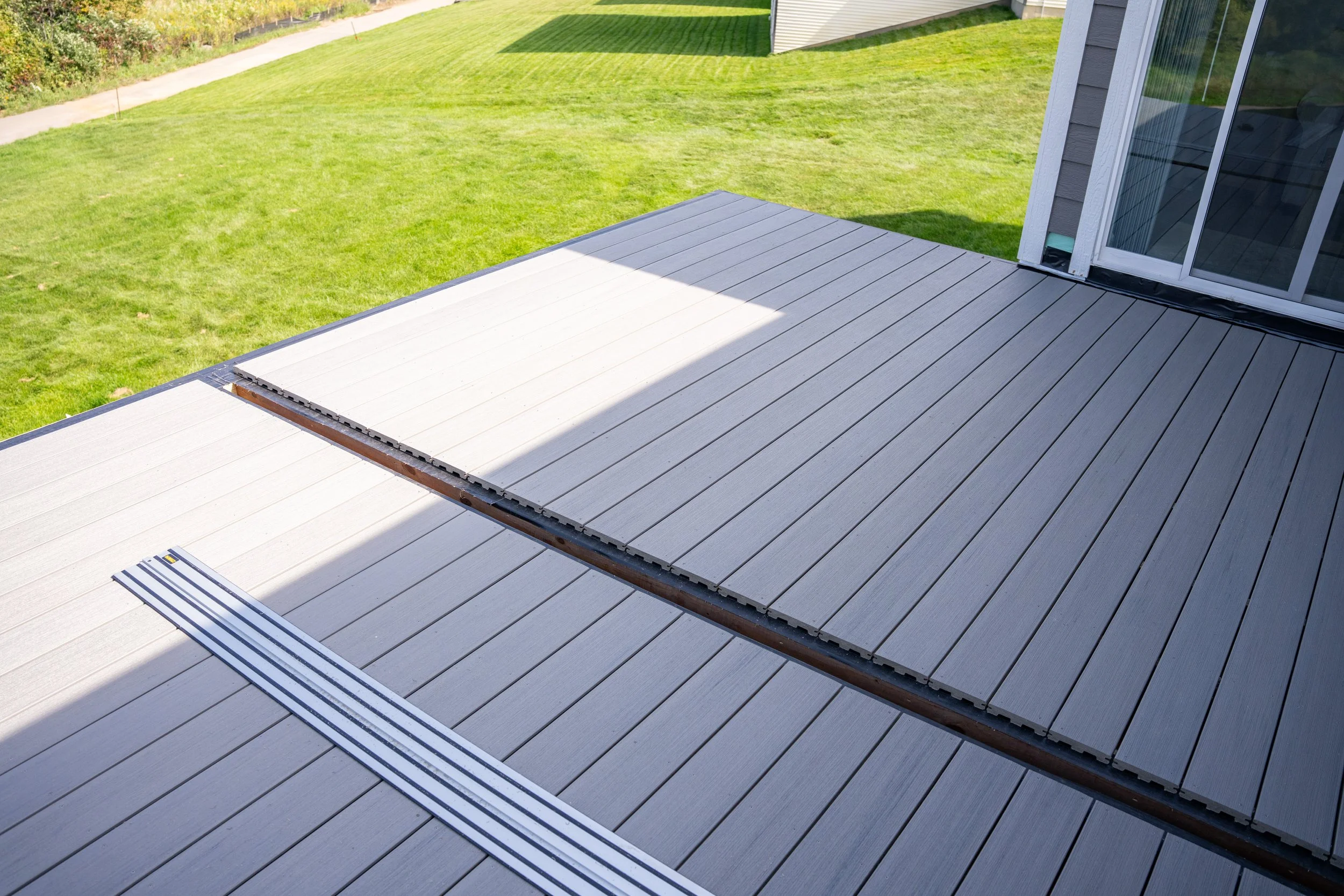
Two-Tone Composite Deck Board Installation in Progress — Precision Decks, Minnesota
How We Evaluated the Best Composite Decking Brands
Our recommendations draw from 2024–2026 product lines, manufacturer specifications, and real-world performance on local Minnesota decks, not marketing claims. Consumer Reports testing and contractor feedback from Twin Cities installations shaped these assessments.
Evaluation criteria focused on cold-climate durability (freeze-thaw resistance with swelling under 1%), fade and stain resistance, slip resistance when wet or icy, and structural performance over time. Warranty strength weighed heavily a 25–50 year structural and fade warranty signals manufacturer confidence far exceeding wood's typical 0–10 year coverage. We also considered aesthetics: color range, realistic grain patterns, and how boards complement Midwest home styles.
| Brand | Warranty | Core Material | Best For |
|---|---|---|---|
| Trex | 25–50 years | Capped WPC | Overall balance of cost and reliability |
| TimberTech | 30–50 years | PVC / Composite | Premium aesthetics, cooler surface |
| Fiberon | 25–50 years | Capped WPC / PVC | Value without compromise |
Trex delivers the best overall balance of cost and reliability with the longest track record in the industry. TimberTech excels for homeowners prioritizing premium aesthetics and cooler-feeling PVC options. Fiberon offers a strong value choice for budget-conscious homeowners who still want quality composite products.
Trex Best Overall Composite Decking for Most Minnesota Homes
Trex is the most widely recognized composite decking brand in the U.S. and accounts for roughly 40% of market share. Their 95% recycled content (diverting 1.5 billion grocery bags annually) appeals to eco-conscious Minnesota homeowners.
The 2026 product families include Trex Enhance (entry level, 25-year warranty), Trex Select (mid-range), and the Transcend line (premium, 50-year fade warranty). The Transcend Lineage series features improved heat resistance via porous capping, staying cooler than competitors in direct sunlight.
Trex decking works well for homeowners wanting dependable composite decking without top-tier PVC prices, replacement projects reusing existing frames, and family decks in suburbs like Maple Grove or Plymouth, where durability and value both matter.
TimberTech Best Composite Decking for Premium Aesthetics and Cooler PVC Boards
TimberTech (including the AZEK line) represents the premium tier, known for highly realistic wood looks and advanced materials that perform exceptionally in wet and cold climates. Their PVC boards contain no wood fiber, eliminating organic material that can support mold growth.
Key 2026 collections include TimberTech Advanced PVC (formerly AZEK) for maximum moisture resistance and cooler surface temperatures. TimberTech Composite lines like EDGE and PRO offer slightly more affordable options with strong scratch resistance.
Many TimberTech boards feature four-sided capping and up to 50-year limited warranties, making them ideal for low-clearance decks or shaded areas that stay damp longer. Consider TimberTech for multi-level lakeside decks, pool-adjacent builds, or homeowners prioritizing barefoot comfort in summer.
Fiberon Best Value Composite Decking Without Sacrificing Quality
Fiberon balances cost and features effectively, making it popular among Minnesota homeowners who want solid performance without premium pricing. Their emphasis on four-sided capped boards and color-through technology delivers clean aesthetics at competitive prices.
Fiberon's strong mold resistance matters for shady or tree-covered backyards common in older Twin Cities neighborhoods. The Concordia line offers lifetime structural and 50-year stain warranty coverage, while Good Life and Sanctuary lines serve the entry-level and mid-range markets.
Fiberon suits budget-conscious upgrades, starter homes in suburbs like Blaine, or projects where value per square foot is the priority.
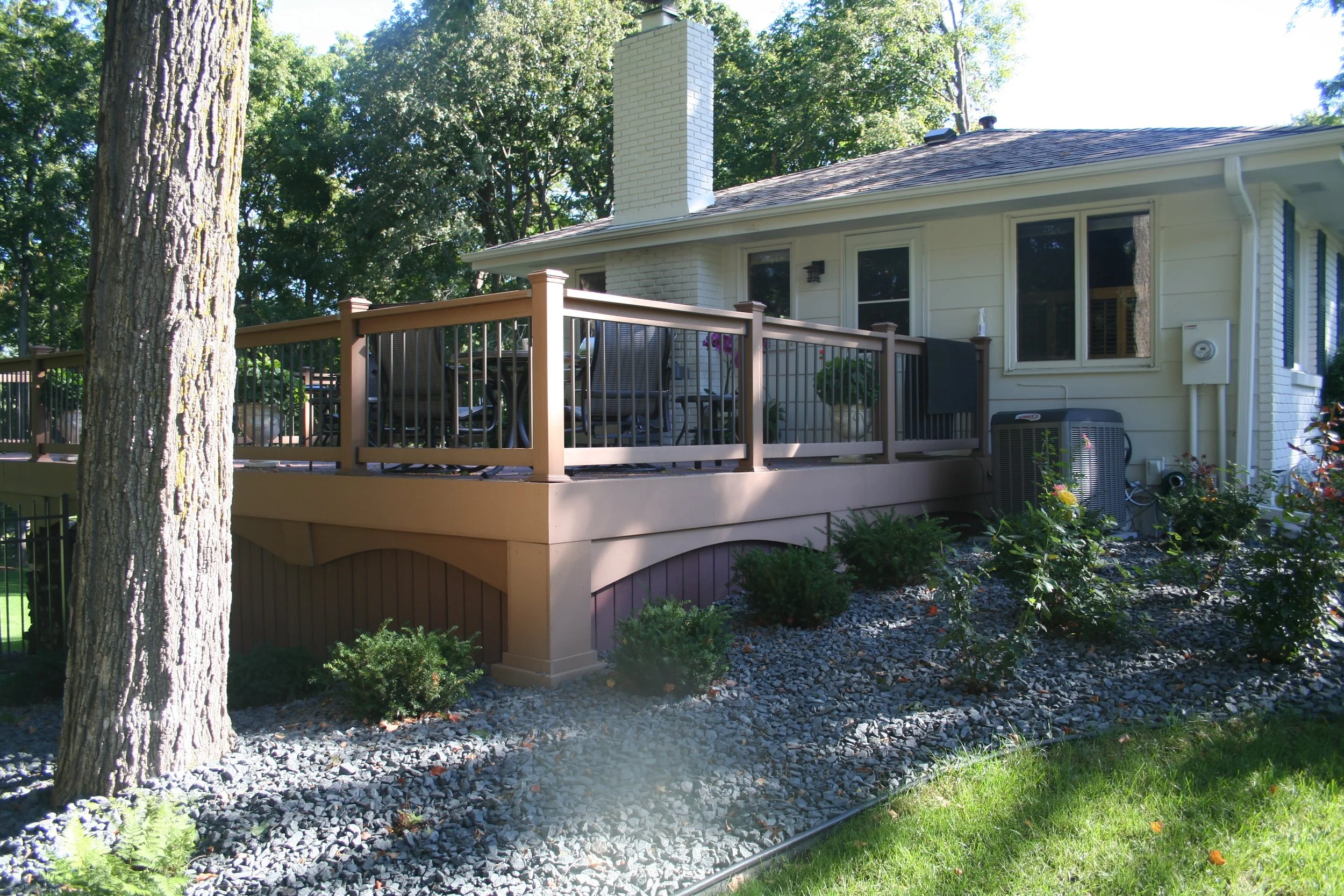
Premium Composite Decking in Shaded Minnesota Backyard
Composite Decking Cost: What to Expect in Minnesota
Exact pricing depends on design, size, site conditions, and current market rates. The best way to understand your real cost is a custom, on-site estimate from a licensed Twin Cities contractor, not a national average or a per-square-foot figure from another region.
A few important points on how decks are priced in this market:
Installed composite deck pricing includes labor, framing, surface boards, and standard features, but stairs, railings, and custom features are typically priced separately, not per square foot.
Stairs, in particular, are quoted based on structural complexity and labor requirements, which differ significantly from flat deck board installation.
Railings are generally quoted per linear foot.
Design complexity, site access, deck height, and lot conditions all affect your final number.
Be cautious of quotes that come in 20–30% below what reputable local contractors typically charge; this often signals lower-grade materials, unskilled labor, or surprise change orders.
For material-only comparisons between brands, ask your contractor to walk through the options side by side. Entry-level, mid-range, and premium tiers within each brand carry meaningfully different price points and warranty terms.
The long-term math strongly favors the composite. Wood requires regular staining plus replacement boards over time. Over 25 years, composite maintenance is a fraction of what wood owners spend. Curious about the full breakdown? See how composite and wood compare in cost over time.
Composite Decking vs Wood: Which Is Right for You?
Pressure-treated lumber still costs less upfront, but composite decking dominates new builds and replacements in Minnesota, 70% of new decks according to 2025 builder surveys.
| Factor | Composite | Wood |
|---|---|---|
| Lifespan | 25–50 years | 10–15 years |
| Annual Maintenance | Occasional cleaning | Staining + sealing every 1–3 years |
| Appearance Over Time | Consistent color | Graying, splintering |
| Long-Term Cost | Lower total over 20+ years | Higher due to maintenance and likely rebuild |
Wood may still make sense for extremely tight budgets, temporary decks, or dedicated DIYers willing to handle consistent upkeep every 1–3 years. Note that pressure-treated is the lowest-grade option; cedar offers better natural aesthetics but still carries significant maintenance demands that are much closer to pressure-treated than to composite in our climate.
Composite is the better choice for busy households, long-term homes in neighborhoods like Maple Grove and Plymouth, or anyone who wants an outdoor living space requiring less maintenance.
Minnesota Weather & Your Composite Deck
Minnesota's climate, sub-zero winters hitting -30°F, rapid spring thaws, hot summers with 70% humidity, and heavy snow loads test any decking material more severely than most of the country.
Modern composite and PVC boards handle freeze-thaw cycles through limited moisture absorption and stable thermal expansion when installed with proper gapping. Unlike wood that absorbs water and cracks when it freezes, quality composite boards remain highly resistant to splitting.
For sun exposure, darker colors warm more in direct summer sunlight. Lighter hues (grays, tans) stay cooler and show less visible fading. Premium lines include fade warranty protection and advanced UV resistance suited for south-facing decks getting full sun.
Snow and ice management requires care: avoid metal shovels and rock salt, which corrode frames and damage cap layers. Use plastic tools and manufacturer-approved calcium chloride de-icers. Clear wet leaves before snowfall to prevent staining and mold.
For low-to-ground builds, drainage and ventilation matter enormously. A knowledgeable local contractor designs for a minimum 1.5-inch joist height, 2% slope for water runoff, and vented risers to maximize airflow and prevent mold in Minnesota's humid springs.
How to Choose a Composite Decking Contractor in Minnesota
Even the best composite decking fails early without proper substructure, hidden fasteners, and installation details suited to harsh climates. Poor installation causes 30% of early composite deck failures, warped boards, gaps closing shut, and voided warranties.
Look for contractors specializing in composite decks (not just wood), with portfolios showing recent Twin Cities projects and familiarity with specific brands. Certification from Trex, TimberTech, or Fiberon indicates training on brand-specific requirements.
Questions to ask potential contractors:
How do you handle freeze-thaw movement gaps for Minnesota's temperature swings?
What's your experience with low-clearance deck ventilation?
What labor warranty do you provide beyond manufacturer coverage?
Can you show recent composite deck projects in Maple Grove, Plymouth, or Blaine?
Ask for real project photos from nearby cities rather than relying on manufacturer brochures. Seeing how outdoor furniture sits on finished decks and how boards meet stairs reveals true installation quality.
Choosing the Best Composite Decking for Your Minnesota Home
The best composite decking brand depends on your budget, how long you plan to stay, desired aesthetics, and your deck's exposure to sun, shade, and moisture. Trex delivers proven reliability at various price points. TimberTech offers premium heat resistance and a realistic look. Fiberon balances quality with value.
Rather than decoding every product line yourself, talking through options with a local expert saves time, especially when planning a 2026 build or replacement. The right contractor matches board type to your specific backyard conditions.
Ready to start? Request a free quote, schedule a design consultation, or browse our recent composite deck projects in Maple Grove, Plymouth, and Blaine.
Best Composite Decking for Minnesota Homes
-
Modern capped composite and PVC decking lasts 25–50 years in Minnesota when properly installed. Factors that extend lifespan include adequate framing ventilation, consistent snow and debris management, and following manufacturer guidelines for cleaning. Factors that shorten it: poor drainage, metal shovel damage, and improper gapping that doesn't accommodate thermal expansion. For comparison, pressure-treated wood decks in Minnesota typically show significant rot and cracking within 8–12 years under heavy winter exposure with minimal maintenance.
-
For most long-term homeowners, yes. Composite costs more upfront than a wood deck of the same size. However, wood adds meaningful annual costs in staining, sealing, and repairs, plus eventual replacement. Beyond finances, composite means more time enjoying your deck instead of maintaining it, a better appearance as it ages, and fewer splinters for kids and pets. Composite typically isn't worth it only for very short-term ownership (under 5 years) or extremely tight budgets.
-
Light color options, grays, tans, and driftwood tones stay noticeably cooler under summer sun than dark browns or charcoals, regardless of brand. Surface temperatures can differ by 20°F+ between light and dark boards in direct sunlight. Some premium collections from TimberTech and Trex include heat-mitigating technology for better barefoot comfort. Before committing, request physical samples and test them outside on a sunny day.
-
Yes, but only with framing designed for adequate drainage and ventilation. Ground-level builds trap moisture and dry slowly, creating conditions for mold even with PVC boards. Four-sided capped boards or full PVC work best. Work with a contractor experienced in low-clearance composite decks who follows manufacturer requirements for minimum joist height (typically 1.5 inches minimum) and airflow.
-
No special sealers or stains are required, that's the point of choosing composite. Most maintenance involves soap-and-water cleaning in spring and fall. For winter: use a plastic shovel (never metal), choose de-icing products approved by your decking manufacturer (calcium chloride over rock salt), and clear dark organic debris like wet leaves before snow accumulates.
